
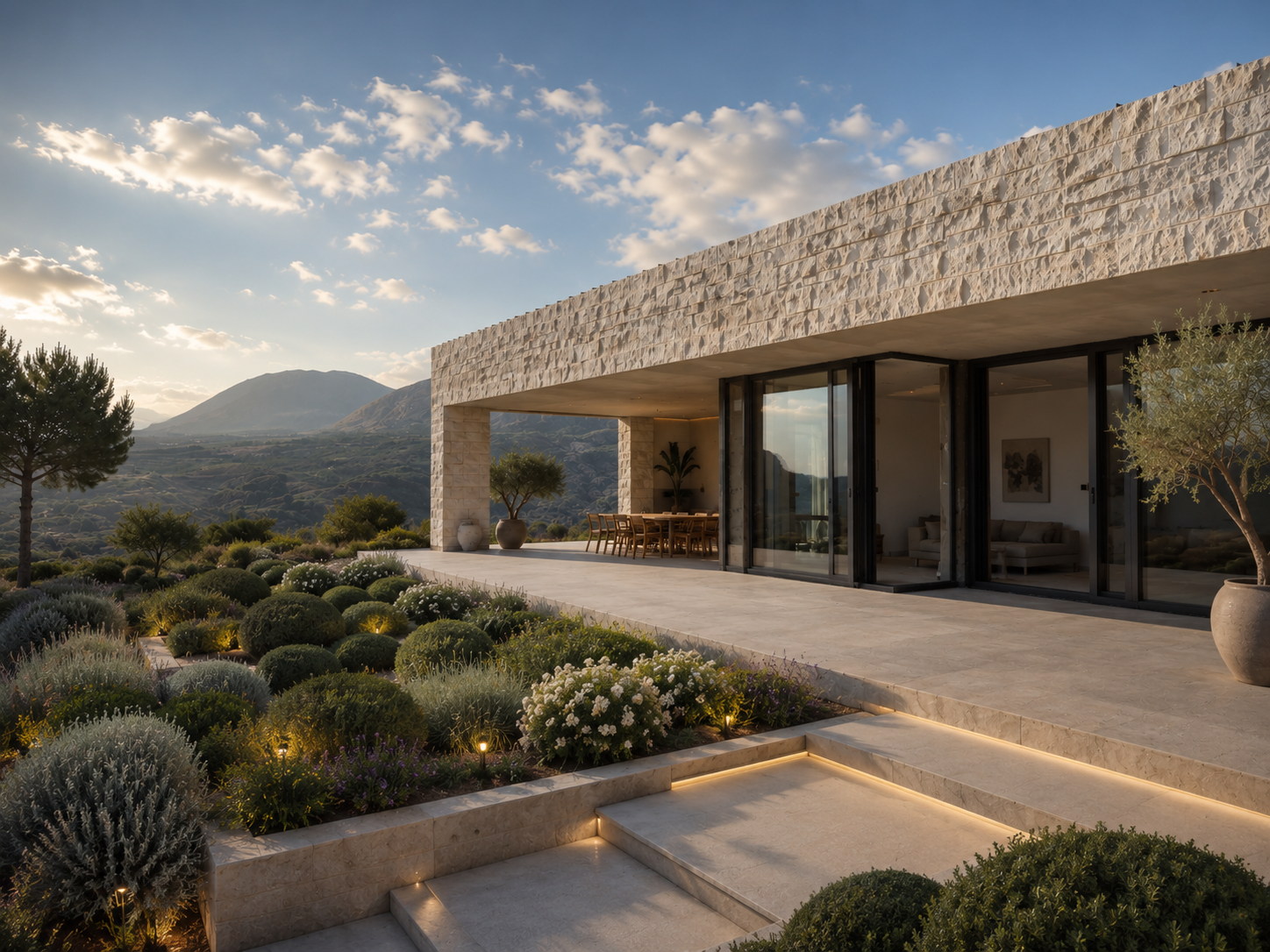
Some houses refuse to choose between past and present, and somehow that works. Step into a restored building in Lebanon, and you might find a hundred-year-old sandstone wall framing a glass door that was installed last year, and the room does not feel mismatched, but instead, it feels crafted with perfection. Getting there takes a particular kind of judgment: knowing which parts of a building are worth keeping exactly as they are, and which parts were only ever there because nobody had gotten around to changing them.
Cosette El Hachem has spent her career making that call, project after project. As head architect and CEO of Lebanese Old Houses, an organization that has spent more than two decades buying and restoring abandoned homes across Lebanon, she works constantly at the point where a building’s history is preserved alongside its modern future self. Her contemporary projects are not a separate line of business from that restoration work. They are the other half of the same instinct.
What an old house asks of its architect
Most people assume heritage architecture is mainly about restraint: leave the wall alone, do not touch the tile. That is part of it, but it undersells the job, a heritage building comes loaded with decades of decisions nobody wrote down, where the afternoon sun lands, why the kitchen sits at that angle, which stones were cut from the local quarry and which were brought in from somewhere else. Reading a house like that, before changing anything about it, takes nearly as much skill as designing one from nothing.
El Hachem talks about this in terms of what a house carries, not just what it is made of. Every old house, in her words, has an “entourage”: its context, its memory, its presence, something that cannot be copied and should not be forced onto a building that never had it. That is why not every renovation becomes a heritage project. Some houses simply need updating. Others are asking to be listened to first.
Modernity as refinement, not erasure
Where the work gets more interesting is in how she treats the other half of her practice: the fully modern builds that owe nothing to any particular historical style. Her studio describes this side of her work as a kind of constructive modernism, design that moves forward without needing to erase what came before it.
That framing matches something she has said herself. “Preservation doesn’t mean staying stuck in the past,” she has explained. “It means understanding where we come from and using that as a foundation to move forward.” You cannot build toward the future, in her view, without first reckoning with the past. She is just as firm about the opposite mistake. Heritage should never become a cage for a designer either. “We shouldn’t all be recreating arches and tiles just for the sake of nostalgia,” she has said. “Architecture must evolve. The responsibility lies in knowing when to preserve, and when to reinterpret.”
A hotel that still feels like a house
The clearest recent example of this sits in the middle of Batroun’s old souk, a few steps from the Phoenician sea wall. A traditional Lebanese house there was recently converted into a ten-room boutique hotel, and the brief was close to a contradiction: fit ten ensuite rooms, a lounge, a restaurant, and a rooftop terrace into a building that was never built to hold any of it, without letting it stop feeling like a house.
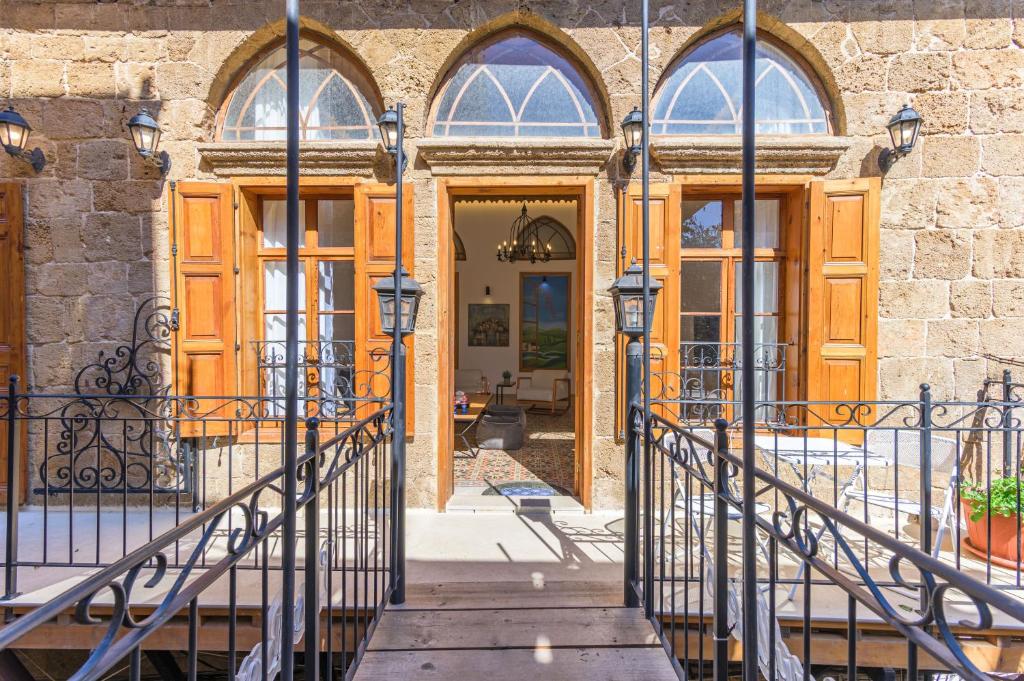
Cosette El Hachem and her team in Lebanese Old Houses started the restoration with the building’s original fabric. Sandstone masonry was cleaned and repointed by hand instead of torn out and replaced. Arched openings and the original ceiling heights, both defining features of Batroun’s old quarter, were left untouched. Every new addition was designed to stay legible, and wherever possible reversible, a conservation principle that basically means building with enough restraint that a future owner could undo the work if they had to. Plumbing, cooling, and lighting were threaded through the structure carefully enough that none of it competes with the stone for attention. The result does two jobs at once: it functions as a hotel, and it keeps a piece of Batroun’s heritage alive because people are actually using it, not because it sits behind glass.
When two heritages meet in one house
Not every project blends only one culture’s past with the present. One renovation on her studio’s books involved a house shaped by Brazilian and African influences long before she ever touched it, and the goal was never to smooth that layered history into something more generically modern. She kept the original textures, colors, and heritage details, then built contemporary light and function around them instead of over them. What came out the other side reads less like a renovation and more like two histories agreeing to share the same address.
Building new without starting from nothing
Even her fully new builds rarely start from a blank page. A recent residence in the mountain village of Akoura was designed for a Lebanese couple living abroad who wanted more than a holiday home. They wanted somewhere that felt like belonging, tied to family and memory even though every wall of it would be new. The design handled that by treating landscape and memory as material inputs alongside light and structure: contemporary in style, but never disconnected from the site or the people it was built for.
It is a pattern showing up across Lebanon right now for a reason. Diaspora families are returning to restore or rebuild the family home at a noticeably higher rate than a decade ago, and most are not chasing a replica of what their grandparents had. What they want is somewhere that remembers the past without being trapped in it.
Why the blend works
None of this reduces to a formula. You cannot bolt a modern kitchen onto an old house and call it heritage architecture, and you cannot gut a building down to its walls and call the leftover stone a design statement. What actually works is closer to a negotiation, one that happens project by project, over which parts of a place are load-bearing history and which parts were only ever there by accident.
That is the real argument for blending heritage and modern architecture instead of committing permanently to one lane. A building that only preserves becomes a museum nobody lives in. A building that only modernizes forgets why anyone wanted to be there in the first place. Somewhere between the two is a house that still remembers what it used to be, while getting on with the business of being lived in today.