
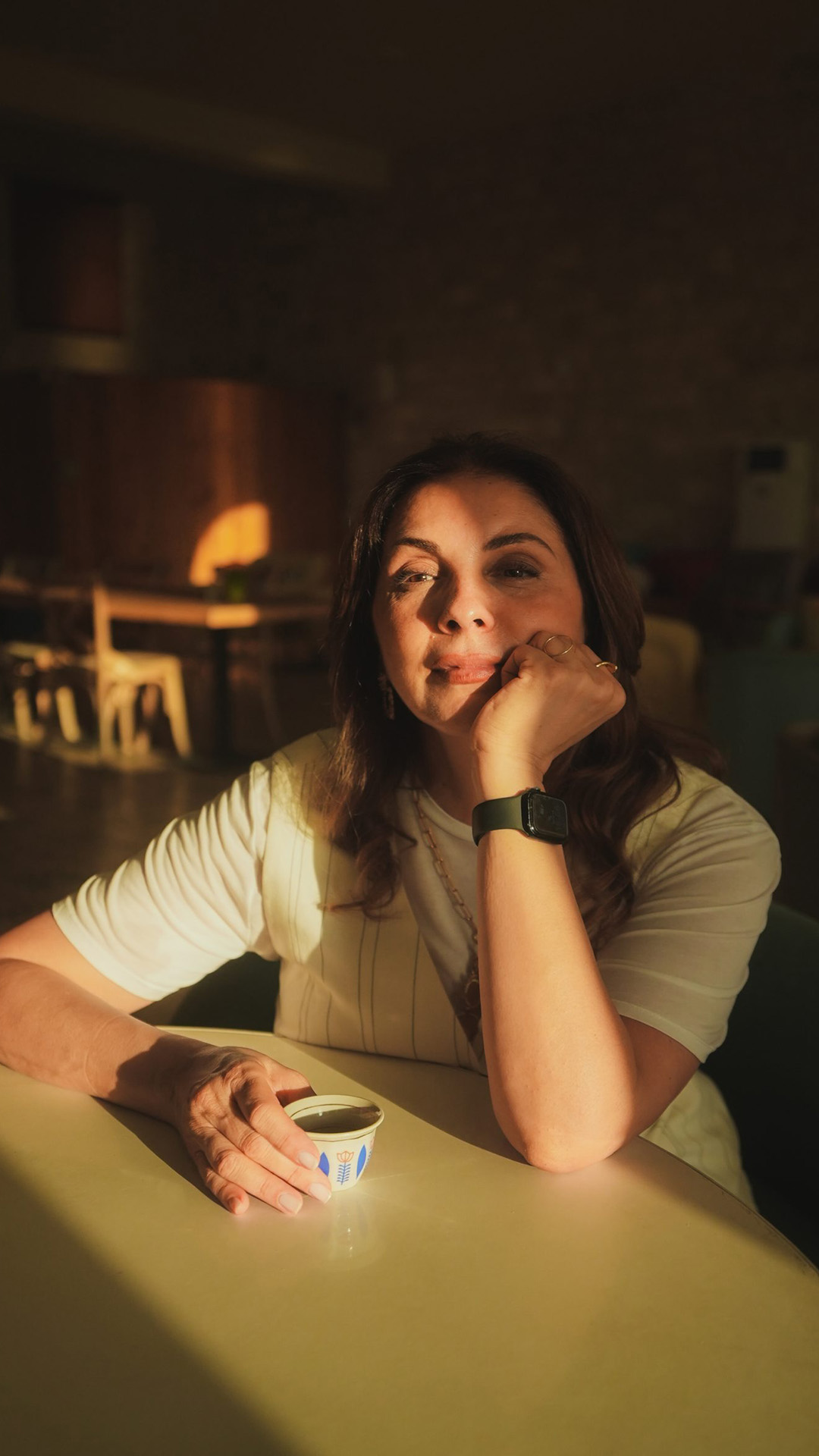
In an industry often shaped by speed, scale, and visual impact, Cosette El Hachem has emerged as a defining voice in Lebanon’s architectural and cultural landscape. Yet her approach moves beyond convention. She has built her practice around something far more lasting: the experience of space. For her, architecture is not simply about form or function, but about the way people inhabit space, the way they move through it, and the memories they build within it. It is a discipline that extends beyond design into emotion, narrative, and lived reality.
With over 30 years of experience, including more than two decades dedicated to heritage architecture, her work reflects a rare balance between preservation and evolution.
She moves artistically between restoring historical structures and creating contemporary spaces, guided by a belief that architecture should not only respond to context, but also shape how life is experienced within it. Her projects are not conceived as isolated objects, but as environments that unfold over time.
El Hachem emphasizes, “through art, I focus on imagination and how it comes alive within a space. Once an architect places something in the world, it cannot be taken away. Its imprint touches everyone who experiences it. Architecture never fails to inspire me; I approach my work with joy.” This philosophy is deeply reflected in one of her most defining roles at Lebanese Old Houses, where, as Head Architect and CEO, she has dedicated years to preserving Lebanon’s architectural identity.
What began as a personal mission soon evolved into a structured approach: identifying abandoned and deteriorating houses across villages, acquiring them, and bringing them back to life with care, research, artistry and intention.

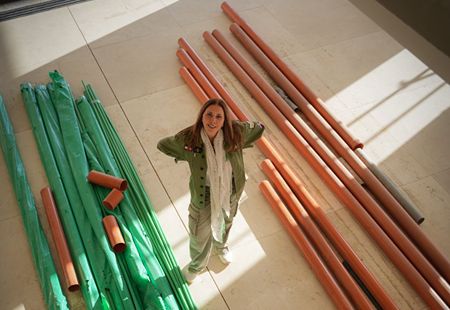
Through this process, El Hachem alongside her team developed a refined methodology; one that honors the original spirit of each home while introducing a level of comfort and practicality suited to modern living.
El Hachem reflects on the importance of preserving heritage as a foundation for what lies ahead, where the past continues to inform the future, and the simplicity of Lebanese homes remains what sets them apart. The work carried out through Lebanese Old Houses goes beyond restoration.
It is an act of cultural continuity.
Reinterpreting the past
Each project is approached with sensitivity to its historical context, ensuring that the “vintage aspect” of the house is preserved while allowing it to function as a living, breathing space once again.
Rather than recreating the past, El Hachem reinterprets it while retaining authenticity through subtly integrating contemporary elements that make the space relevant for today. Her expertise in heritage architecture further reinforces this approach.
Since 2017, in her role as CEO and Head Architect at Lebanese Old Houses, she has been actively involved in a project focused on the restoration of historic churches, in collaboration with the Holy Spirit University of Kaslik, the Ministry of Foreign Affairs, and international partners such as the Hungarian Embassy.
These projects require a level of precision that goes beyond technical execution. They demand a deep respect for history, craftsmanship, and cultural significance.
Yet, for El Hachem, heritage is not something frozen in time. It is something alive capable of evolving while maintaining its essence.
This perspective was particularly evident during her work on the Diaspora Village in Batroun, where the discovery of a hidden historical site became a defining moment. Rather than overlooking it in favor of progress, she chose to pause, investigate, and engage an excavation team to preserve it.
It was a decision that speaks to her core belief: that architecture must honor what came before while making space for what comes next.
Designing for the present
At the heart of her broader practice lies a commitment to listening. Before any concept is drawn or direction is defined, El Hachem takes the time to understand her clients, their habits, their aspirations, and the way they move through their daily lives. This process becomes the foundation of her work, allowing each project to emerge as a reflection of the people who will inhabit it, rather than a predefined aesthetic.
This sensitivity to human experience is what gives her architecture its depth. Her spaces are not static compositions; they are dynamic environments shaped by light, movement, and interaction. She often describes architecture as a form of scenography, where everyday life unfolds through a sequence of carefully composed spatial experiences.
In this sense, her work invites a kind of discovery, almost through an intuitive movement space that mirrors the rhythm of real life.
Alongside her work in restoration, El Hachem brings the same level of intentionality to contemporary architecture. Her modern projects are not driven by trends or superficial aesthetics, but by atmosphere and experience.
Cosette shares, “I love when space puts someone in a particular state of mind. I don’t solely focus on decoration; light and shadow are essential elements that shape the experience. I’m drawn to minimalism because it connects deeply to one’s everyday, personal life.” She approaches design as a careful balance between simplicity and richness, ensuring that even the most minimal spaces carry a sense of warmth, identity, and emotional resonance.
A defining aspect of her practice is her involvement across every stage of a project. From initial assessment and concept development to execution, supervision, and post-construction follow-up, she maintains a hands-on presence that ensures continuity and integrity.
This approach allows her to translate ideas into built reality with clarity and precision, preserving the essence of each design from beginning to end.
Shaping the future
Her journey, however, is not defined by architecture alone.
At a time when architecture was not the most conventional path for women, she pursued her direction with clarity and determination, eventually becoming Head Architect and CEO of Lebanese Old Houses. Her career also extended into media, where she served as Head of Art and Culture at Addiyar newspaper, before moving into academia as a professor at the Holy Spirit University of Kaslik.
Balancing these roles with motherhood, she represents a model of resilience and multidimensional growth; one that continues to shape both her perspective and her work.
Beyond her individual practice, El Hachem is deeply engaged in community-driven initiatives. As a board member of Batrouniyat, she contributes to efforts that empower women and encourage people to remain rooted in their hometowns, fostering local identity and sustainable livelihoods.
At the core of everything she does lies a clear set of values: commitment, empathy, integrity, experience, and passion. These are not simply guiding principles. They are reflected in every space she creates, every project she leads, and every decision she makes.
For El Hachem, architecture is not about leaving a signature. It is about leaving a feeling. It is about creating spaces that people do not simply occupy, but truly inhabit spaces that become part of their lives, their memories, and their identity.