
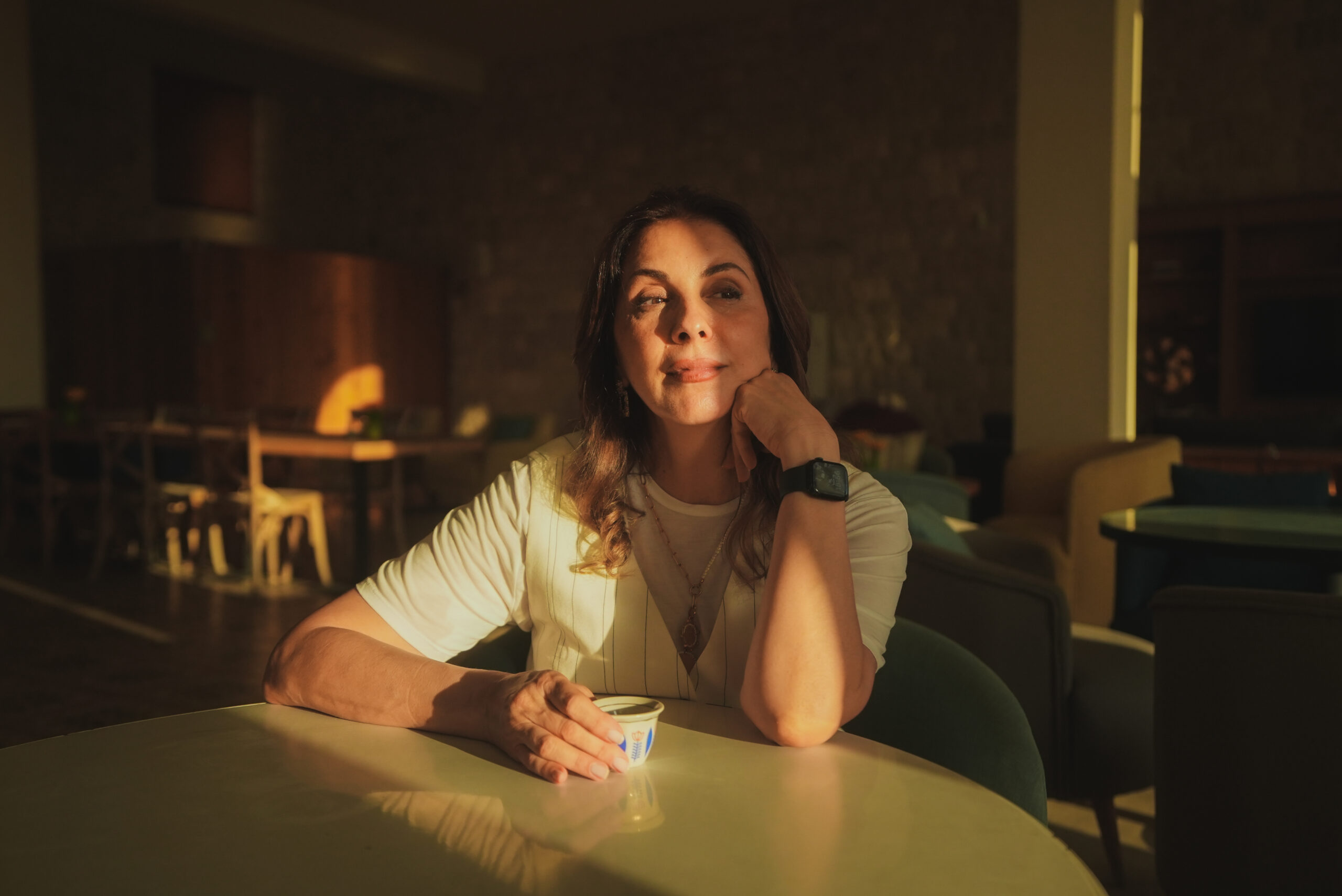
In Lebanon, where history is layered into every stone, architecture is never just about building; it is about remembering, reinterpreting, and reimagining. For architect Cosette El Hachem, this responsibility sits at the core of her practice. Balancing a deep respect for Lebanon’s architectural heritage with a refined, minimalist approach shaped by modern influences, her work navigates the delicate line between preservation and progression. In this conversation, she reflects on restoration, authorship, and the emotional experience of space, revealing an architectural philosophy rooted as much in human values as it is in design
What drew you to architecture in the first place?
Architecture was the perfect intersection between science and art.
But it was also, in a way, a personal decision. At the time, it was still a male-dominated field. I wanted to enter that space and claim my place in it.
I didn’t come in fully prepared. I learned along the way. But maybe that’s what shaped me. It made me curious, adaptable, and open.
Your work sits between heritage and modern architecture. How do you navigate that balance?
For me, architecture always operates on two parallel lines. The first is heritage: Lebanese architecture that I’m deeply attached to, not only aesthetically but culturally and emotionally. The second is modern architecture, which I studied, practiced, and evolved with over time.
But I don’t see them as opposites. Preservation doesn’t mean staying stuck in the past. It means understanding where we come from and using that as a foundation to move forward. You cannot build the future without processing the past.
At the same time, I don’t believe heritage should restrict us. We shouldn’t all be recreating arches and tiles just for the sake of nostalgia. Architecture must evolve. The responsibility lies in knowing when to preserve, and when to reinterpret.
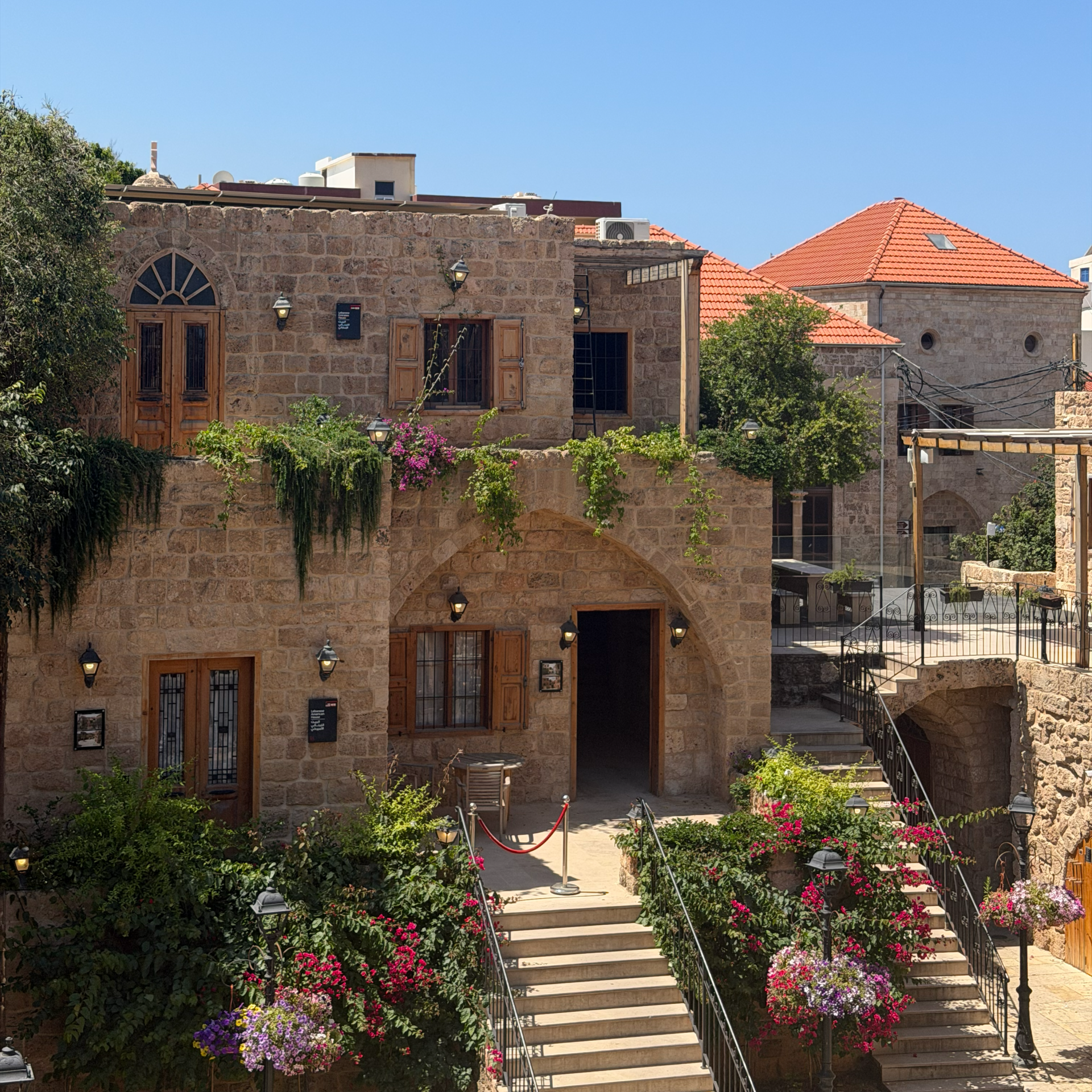
The “Lebanese Diaspora Village” project in Batroun is one of your most significant works. What made it so complex?
It was complex on every level: historical, architectural, and emotional.
What made the project even more delicate is that the entire site sits above a buried Phoenician fortress. Excavating it would require enormous funding, so its preservation depends on keeping it underground. Once funding becomes available, the site will be excavated and made accessible to the public. It was a project that I developed within Lebanese Old Houses in collaboration with the Municipality of Batroun. Each house was funded accordingly by a Lebanese diaspora community based abroad.
We approached the project in phases over five years. We surveyed, lived the space, studied it deeply. Some structures had to be demolished, others rebuilt. In certain cases, we reconstructed houses stone by stone using old photographs as reference.
Today, when you walk through the village, there’s a shift. You feel like you’ve traveled. That’s the goal. Not to recreate the past artificially, but to restore its spirit in a way that feels alive.
You’ve spoken about restoring “spirit” rather than just structures. What does that mean in practice?
A heritage project is not just a physical intervention. It’s an emotional and cultural one.
Every old house carries an “entourage”. Its context, its memory, its presence. You can’t replicate that artificially, and you shouldn’t try to apply it everywhere. Not every project should be a heritage project.
When we restore, we’re not decorating; we’re listening. We’re trying to understand what the space was, how it functioned, and how people lived within it. Then we reintroduce life into it.
There was a moment during one project when a house partially collapsed during a storm. We had to rebuild it using archival images from decades ago. That level of precision is not just technical, it’s respectful.
You and your team at the Lebanese Old Houses have played a role in the revival of Batroun. How do you see that impact?
We’ve been working in heritage architecture since 2006, and Batroun became a natural focus.
The revival of the Batroun souk, for example, was not a single effort; it was a collective vision involving Lebanese Old Houses, the municipality, engineers, and the community. Then, we helped shape and drive that vision architecturally.
Seeing a place come back to life, not just physically, but socially, is incredibly fulfilling. It’s one of the parts of my career I’m most proud of.
How did your early education shape your perspective on space?
One of the most influential experiences was documenting traditional houses, measuring them, drawing them, and understanding them stone by stone.
That’s when I discovered how intelligently our ancestors designed spaces. Lebanese houses, especially central ones, are built around gathering. Every room opens onto a shared courtyard. There’s very little privacy, but there’s a strong sense of community and connection.
What fascinates me is the balance. These homes are both intricate and simple. They adapt across regions while maintaining a clear identity. That’s something I carry with me in every project.
You often talk about the responsibility of architects. Why is that so central to your philosophy?
Because architecture leaves a lasting imprint far beyond its time.
Once something is built, it becomes part of the landscape. You can’t just undo it. That permanence makes every decision critical.
As architects, we leave a mark. And that mark has consequences: on people, on cities, on culture. That’s why every project must respond to its specific context. There is no universal solution.
Your modern work leans toward minimalism. What draws you to it?
Minimalism, for me, is not just an aesthetic. It’s a way of thinking.
It’s about stripping away everything unnecessary to reveal what truly matters. Pure volumes, clean lines, honest materials. The space itself becomes the experience.
I’m deeply influenced by Le Corbusier (Swiss-French Architect) and Tadao Ando (Japanese Architect), especially in their use of light, shadow, and raw materials. There’s also a strong connection to nature in their work, which resonates with me.
But beyond architecture, minimalism reflects something human. It’s about clarity, values, and living with intention.
You describe architecture as an “experience.” How do you design for that?
A project, for me, is a sequence, a journey.
It’s about what you see as you move through space. How circulation guides you. How light enters at different times of the day. How shadows shift.
Sometimes, it’s the smallest moments that matter. The shadow of a tree falling onto a wall in the afternoon can transform a space into something almost like a painting.
I want people to feel something when they inhabit a space, not just see it.
Teaching wasn’t planned for you. How did it shape your career?
It happened by chance. I was invited to teach, and it opened up something I didn’t know existed in me.
I discovered how much I love engaging with students, guiding them, challenging them, but also giving them autonomy. I don’t believe in imposing solutions. I try to help them think.
Teaching changed me. It made me more aware, more reflective. It became a parallel passion to architecture.
What does architecture represent for you today?
Architecture is self-expression through the medium of art and architecture; it’s my intimate echo in a vast world that I freely and passionately mold it according to each client’s taste.
It’s not just a profession. It’s a language. Every project is a story, a translation of ideas, emotions, and experiences into space.
And every time someone trusts me with a project, I feel a sense of responsibility but also gratitude. Because for me, architecture is not just what I do. It’s who I am.
In a country where history is constantly at risk of being forgotten or rewritten, Cosette El Hachem’s work stands as a quiet act of resistance. Through her approach, heritage is not frozen in time, nor reduced to aesthetic nostalgia, but reactivated as a living, evolving narrative. Each project becomes a dialogue between what was and what can be, shaped by a deep awareness of context, memory, and responsibility. It is this balance, between restraint and reinterpretation, that defines her architectural voice.
Ultimately, her practice reminds us that architecture is not only about space, but about meaning. It is about the stories embedded in walls, the lives that pass through them, and the legacy they leave behind. In preserving and reimagining Lebanon’s built environment, she is not just restoring structures, but contributing to a collective memory that continues to shape identity across generations.